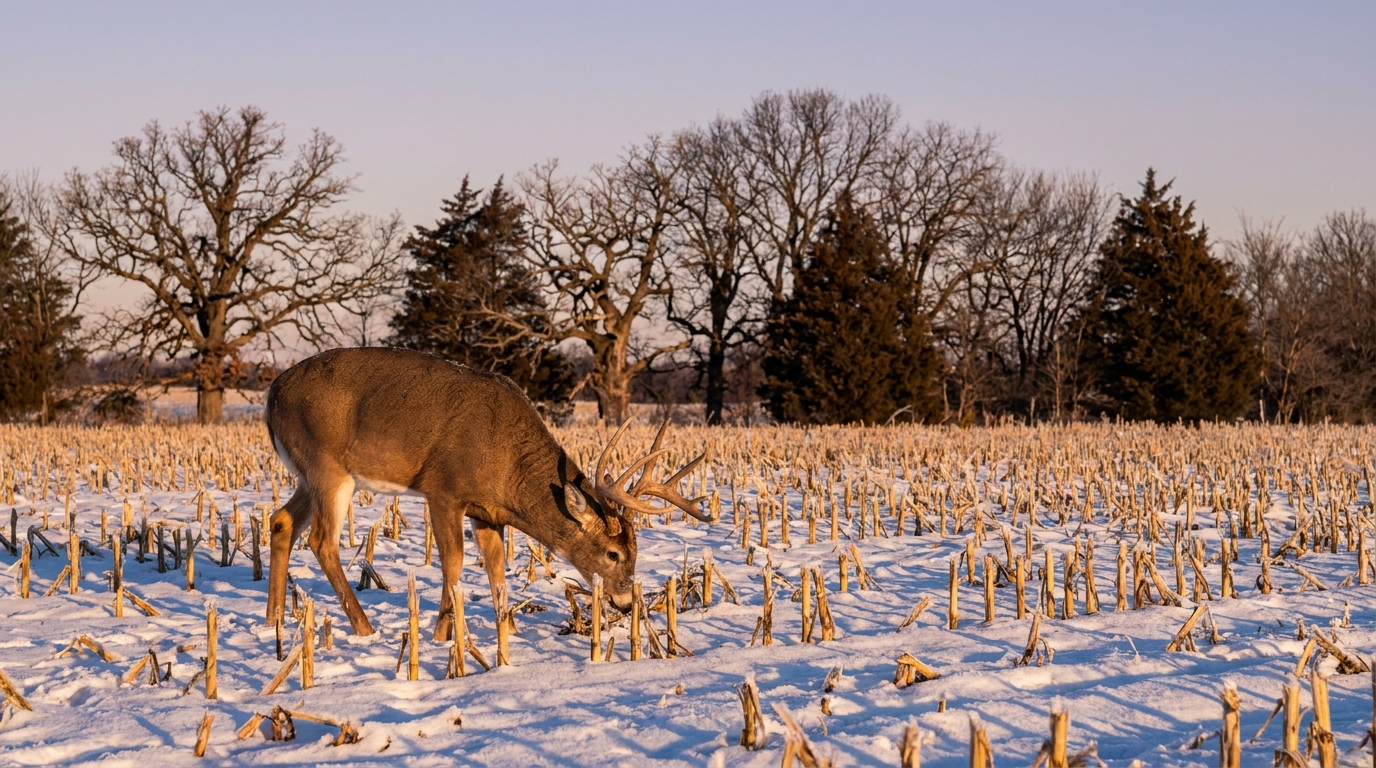
Late-season whitetail hunting is either feast or famine. By December, most hunters have packed up or mentally moved on. That's exactly the problem, and exactly the opportunity.
Bucks spent October and November burning themselves down. They've lost 20 to 25 percent of their body weight chasing does. Now they have one job: eat enough to survive winter. If you can find what they're eating and put yourself between that food and where they bed, you can kill a mature buck in December that would've been nearly impossible to pattern in October.
What Bucks Are Actually Doing After the Rut
The rut doesn't end with a clean cutoff. Does cycle out of estrus over several weeks, and bucks gradually stop chasing. By mid-December in most states, a mature buck's daily routine looks almost nothing like his October one. No scrape-checking. No random cruising. He's conserving calories.
Bachelor groups don't immediately reform. Bucks tolerate each other near food sources but don't actively seek company the way they do in summer. They'll bed within a few hundred yards of their preferred food, often on south-facing slopes that hold warmth from the low winter sun and break the north wind. Cedar groves, pine stands, and thick swamp edges serve as thermal cover when temperatures crater.
Movement compresses to a tight afternoon window. On genuinely cold days, big deer may not leave their beds until 3 or 4 p.m. Plan for that. A morning sit in brutal cold can waste your best access route and pressure the area; save the effort for an afternoon when deer are going to move before dark regardless.
Cold fronts push deer movement, but the afternoon after a front often moves more deer than the front itself. As temps moderate slightly after a hard freeze, deer seem to exhale and feed more freely. Watch that window carefully.
Food Sources That Actually Matter in December
Late-season hunting is food-source hunting. Everything else is a variable; this is the constant.
Standing soybeans top the list. If there's an unpicked soybean field within a mile or two of good bedding cover, deer will be on it every afternoon. Soybeans are high in fat and protein, exactly what a nutritionally depleted deer needs in January. Other food sources are secondary when beans are available.
Corn holds deer into December in most states, but availability and pressure vary. Once a picked cornfield gets hunted hard, the biggest deer often shift to a secondary source. Monitor both.
Brassicas — kale, turnips, radishes — earn their reputation after multiple hard frosts break down their cell walls and convert starches to sugars. A food plot planted in late August can be genuinely excellent by December, especially the leafy tops that stay accessible above light snow. If you planted brassicas and haven't hunted them yet, wait until after the first sustained cold snap.
Winter wheat and rye provide green browse when everything else is dormant. They draw well in the South and on warmer days further north.
Before you hang a stand, know which source is actually pulling deer. A trail camera on the field edge a week before your hunt tells you more than a week of guessing from the truck.
Getting In Without Burning Your Setup
Pressure kills late-season spots faster than anything else. A bumped buck, a sloppy approach, a bad exit on the wrong wind — any of it can push a mature deer to nocturnal for the rest of the season. He's not running on rut adrenaline. He's running on survival instinct.
Route matters. Walk in through water when you can. Frozen creek beds don't hold boot scent the way a dry trail through leaf litter does. Cross open ground in early morning while thermals are still rising, before the afternoon reversal pulls your scent toward the ground.
Set up high. Afternoon thermals carry scent downward, and a stand or saddle at 25 to 30 feet gives you meaningfully more buffer than 18 feet. In open agricultural settings especially, deer scan everything at and above their eye level on the way in to feed.
Play the wind straight. Late-season winds are steadier than the thermal swirls of September. There's rarely a reason to compromise on wind direction in December, so don't hunt a stand wrong just because you want to be there.
Dressing for a Long Cold Sit
Most hunters either overdress for the walk in or underdress for the sit. Split the problem: walk in light and dress at the tree.
Wear a base layer and a mid-layer on the hike. That's it. Carry your insulation in your pack. Once you're in position and your heart rate comes down, pull your heavy jacket or bib on before you cool off. Adding layers while you're still warm keeps you warm. Trying to warm back up after you've gone cold is a losing fight.
For base layers, merino wool handles moisture better than synthetic in sustained cold. It doesn't dump sweat the way polyester can, and it stays functional even when damp. Go 250 weight or heavier for temperatures below 30°F.
Your feet and hands quit first. Insulated hunting boots with at minimum 400g insulation and real waterproofing matter far more than most hunters realize when you're sitting on a frozen platform for four hours. Chemical toe warmers taped inside your boot on the coldest days are not overkill; they're the difference between staying until dark and bailing at 4:30.
For your hands, carry hand warmers in a muff and keep them there between shots. Convertible hunting gloves with a mitten shell you can flip back at the moment of truth beat numb fingers every time.
Hunting jackets and heavy insulation layers are worth checking now if you haven't upgraded yours. End-of-season clearance on insulation runs deep, and next fall's cold sits will come faster than you think.
Saddle Hunting in the Cold: What Changes
Saddle hunting below 20°F introduces a few problems that stand hunters don't face.
Rope behavior changes in extreme cold. Lineman's belt ropes get stiff and grabby; carabiners become difficult to work with heavy gloves on. Before any cold-weather hunt, swap to a larger auto-locking carabiner you can operate with a mitt. Check your lineman's rope for stiffness at home the night before.
Platform insulation is the most underrated cold-weather upgrade. A bare aluminum platform conducts heat straight out of your boots through conduction. A thin closed-cell foam camping pad cut to fit breaks that transfer completely. Two dollars and five minutes, and it makes a real difference by hour three. Saddle hunting accessories and platform gear are worth a look if you haven't kitted yours out for winter yet.
Brands like Tethrd design their saddle setups for four-season use, and their cold-weather rope and hardware choices reflect extended sits in the single digits. Worth checking their current lineup if you're still running older equipment.
One actual advantage of the saddle in cold weather: you can rotate your position, adjust your lean, and stand briefly to restore circulation without committing to a noisy stand shift. Use that mobility on long sits.
Draw practice with your cold-weather gloves on is not optional. Cold muscles and heavy gloves change how 65 or 70 pounds comes back. If you haven't drawn your bow in three months, do it at home in your hunting gloves before you do it when a mature buck is standing 25 yards out.
Scent Control in Snow and Cold
Cold air slows scent dispersal slightly, but a deer's nose still works fine at 5°F. Don't get careless because it's winter.
Snow is genuinely useful for reading travel patterns. A fresh snow shows you exactly where deer are moving, how recently, and in what numbers. But snow also holds boot scent longer than bare ground does. Walk in through water when you can; spray your boot covers if you can't.
The biggest scent variable in late season is the same as every other season: wind. Deer in survival mode are not going to forgive a marginal approach. With predictable afternoon feeding patterns working in your favor, there's no reason to burn a sit with the wrong wind. Wait for the right day.
When to Pull the Trigger on a Late-Season Sit
Late season rewards patience. The temptation to hunt marginal conditions is real, especially once a tag has been burning a hole in your pocket since September. But hunting your best food-source setup in 42°F cloudy weather with a swirling south wind teaches deer that your setup is dangerous.
Wait for the northwest wind behind a cold front. Clear sky, dropping temperatures, two days of brutal cold that kept deer bedded and hungry. That's the sit worth burning. That's when a mature buck that's been running nocturnal for a month shows up at 4:45 p.m. in the field.
For current deals on cold-weather hunting clothing, insulated boots, and saddle gear, check what's on sale at Treestand Saver. End-of-season clearance on insulation and cold-weather gear can run 30 to 50 percent off, and next fall's first cold front will arrive before you've budgeted for it.