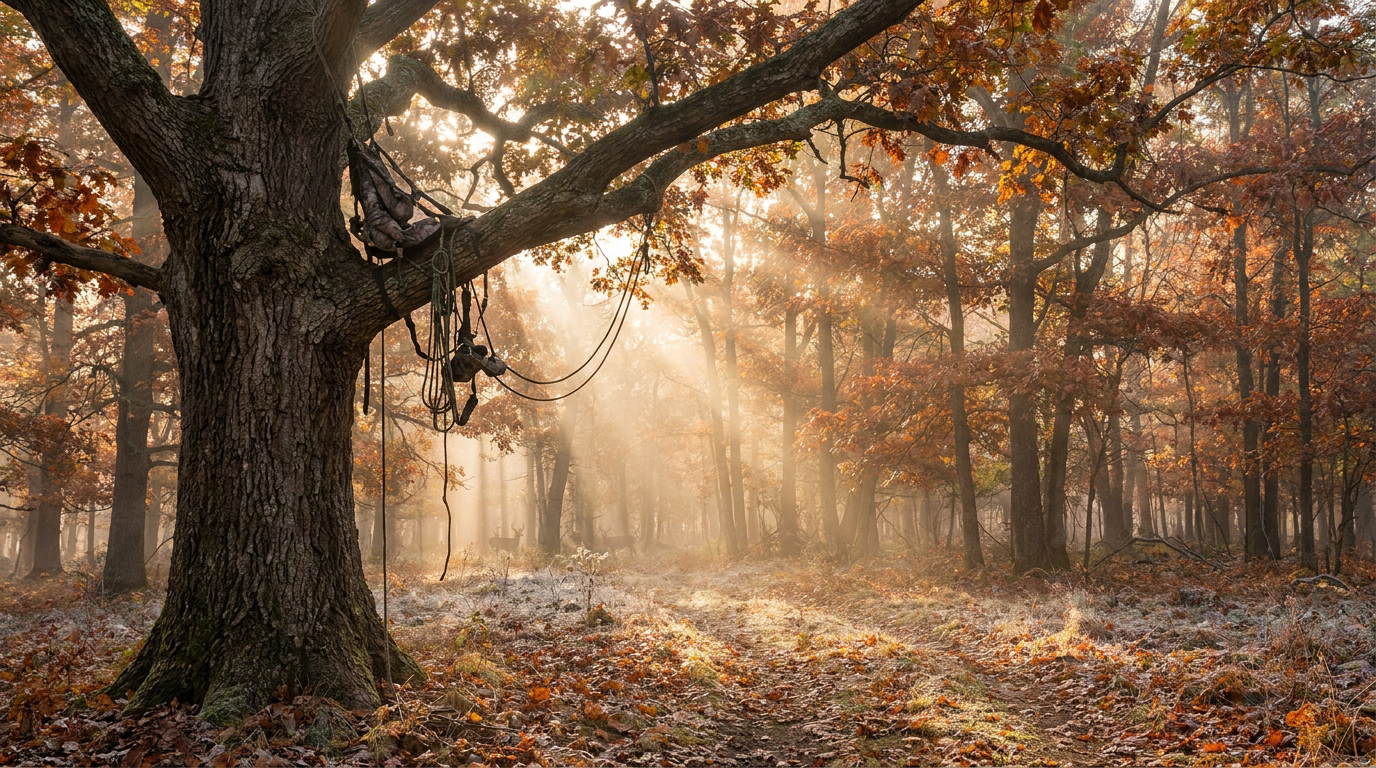
The first time you sit in a hunting saddle 25 feet up a white oak, it doesn't feel like hunting. It feels like you're wearing a lawn chair. That's temporary. By the third or fourth hang, the setup becomes mechanical — you stop thinking about the gear and start hunting.
But that curve is real, and most beginner guides skip it. They show you the brands and tell you it's "simple." This one covers what it actually costs, what you can skip at first, what you can't, and the specific mistakes that send people back to a conventional hang-on after one season.
Why Saddle Hunting at All?
If you're already sold on saddles, skip this section. If you're still deciding: the core advantage is mobility and tree selection. A standard hang-on stand locks you to a tree with the right size and orientation. A saddle goes anywhere — you can hunt a 6-inch sapling if deer are moving past it. You also face the tree, which makes it genuinely easier to draw on a deer appearing behind you without flagging your movement.
The tradeoffs are real. Saddle hunting has a steeper learning curve than a ladder stand. The physical fitness bar is higher. You won't be comfortable on a 4-hour sit until you've dialed in your setup. And the two-rope system — the part most beginners butcher — requires practice before you take it into the woods.
The Actual Kit: What You Need, in Order
1. The Saddle
Everything else supports the saddle. The two most common entry points are Tethrd and Trophyline — both make quality saddles in the $230–$270 range, both have active communities, and both designs have been refined over several seasons of field feedback.
What matters before you buy:
- Fit over brand. Saddles come in torso sizes (short/regular/tall), not just waist. Measure your torso before ordering.
- Bridge vs. wraparound: Most beginner saddles use a single front bridge point. Dual-bridge or ring systems let you adjust lean angle mid-sit — more flexible, but more to learn initially.
- Leg strap comfort is the number-one factor in long sits. If you plan 3+ hour sits, look for quilted or neoprene-padded leg straps. This matters more than any other feature at the beginner level.
At $230–$260, you're buying a real saddle, not a compromise. There's no meaningful quality jump until you reach $350+, which isn't where a beginner should spend first.
2. Lineman's Belt
The lineman's belt keeps you attached to the tree while climbing and descending. Without it, you have no fall protection below your tether height. This is a safety item — not optional.
A lineman's belt is a length of amsteel or climbing rope with two carabiners, one on each end, both rated to climbing standards. Look for CE-certified or TMA-approved hardware. Working load limit (WLL) ratings on cheap carabiners are not fall-arrest ratings — they're different numbers that don't protect you in a fall.
Budget $30–$60 for a solid setup, or build your own with 8mm climbing rope and rated steel carabiners. Many saddle starter kits include this, which is one reason kits make sense for beginners.
3. Climbing Sticks
This is where the price spread is widest. The honest answer: cheap sticks work. Great sticks are quieter, lighter, and faster to hang.
Budget ($80–$150 for a set of four): Steel-bodied sticks from Hawk or Muddy. They get you up the tree. Heavier, slower to hang, and louder — fine if you're hunting one or two spots per season.
Mid-range ($150–$250 for a set of four): Aluminum sticks like the Tethrd Skeletor line. Noticeably lighter with better strap systems. The right move once you've confirmed saddle hunting is your method.
Premium ($280–$400+): Titanium-bodied sticks with quick-strap attachment. If you're doing multiple hang-and-hunt setups per week and pack weight is a real constraint, the upgrade pays off. For a beginner doing a few spots per season, it isn't where the money goes first.
How many? Four 20-inch sticks reaches 18–20 feet on most hardwoods. Start with four; don't chase height your first season.
4. Platform
The platform is where your feet rest. It's not a seat — the saddle handles that. What you want:
- Non-slip surface (rubberized or textured)
- Silent attachment (strap systems beat chain)
- A raised lip so you can set your feet without watching them
Budget $100–$150 for a functional steel platform. Lightweight aluminum starts around $200. A common beginner mistake is skipping the platform entirely and using aiders (loops of webbing). Aiders are their own skill — learn the platform first, then add aiders once you have your setup dialed.
5. Tree Tether
Your tether connects you to the tree at hunting height. It serves a different purpose than the lineman's belt — it's shorter, adjusted once you're at your hunting height, and forms the attachment point your saddle bridge clips into.
Most starter kits include a tether. If you're buying separately, look for at least 18 inches of adjustment range and a rated steel ring or swivel at the tree-contact end. Position the ring at chest height or slightly above — too low and you lean forward more than you want, which changes your shooting lanes and accelerates fatigue.
The Two-Rope System: Where Beginners Go Wrong
The lineman's belt and the tether are two separate ropes serving two different jobs. Beginners sometimes try to use one rope for both — or they clip into the tether before disconnecting the lineman's. Neither works cleanly.
The correct sequence:
- Attach lineman's belt to the tree at ground level, both ends clipped to your saddle bridge
- Climb, repositioning the lineman's above you at each stick
- At hunting height: wrap and secure the tether around the tree, clip to saddle bridge
- Then unclip the lineman's — you are now hanging on the tether
- To descend: reattach the lineman's below the tether before unclipping the tether
Practice this sequence at ground level, then at 6–8 feet, before you hunt from 20 feet. The order isn't complicated, but it needs to be automatic before height makes it feel urgent.
Tree Selection: What Most Guides Don't Cover
Not every tree works well for saddle hunting. Specifics:
- Bark texture matters. Rough-bark oaks and hickories grip climbing stick straps better than smooth-bark beeches and young maples. You'll feel the difference on setup time.
- Trunk taper: A tree that narrows significantly from base to 20 feet means readjusting strap lengths at every stick. Consistent-diameter hardwoods are easier to learn on.
- Avoid sick or recently dead trees. Bark slippage is real. Test by pressing a stick strap firmly against the bark and pulling — it should bite, not slide.
- Lean: A tree with 5–10 degrees of lean toward your primary shooting lane actually works in your favor. More than 15 degrees and the geometry gets awkward.
- Minimum diameter: You can saddle hunt trees as small as 5 inches in diameter, but first-season hunters should stay on 8-inch+ trunks where sticks seat predictably.
Realistic Budget Breakdown
| Item | Budget | Mid | Premium | |------|--------|-----|---------| | Saddle | $235 | $260 | $350+ | | Lineman's belt | $35 | $50 | $65 | | Climbing sticks (4) | $120 | $200 | $340+ | | Platform | $105 | $150 | $210 | | Tether | Included / $30 | $40 | $60 | | Total | ~$525 | ~$700 | $1,025+ |
A complete, safe, functional saddle setup starts around $500–$550. The premium gear is lighter, quieter, and faster to hang — none of it makes you a better saddle hunter. Practice does.
If you're buying incrementally: start with a quality saddle and lineman's belt, use affordable sticks, and upgrade from there once you've confirmed this is your method.
The Honest Learning Curve
Most hunters feel awkward through the first two or three hangs. By the fifth or sixth, the setup sequence feels routine. By the tenth, you stop thinking about it.
What accelerates the curve:
- Practice at home at 8–10 feet before season. Get the sequence automatic before you're hunting.
- Film your first few setups with your phone and watch for wasted movements — it's the fastest feedback loop available.
- Join saddle hunting communities on Reddit or manufacturer forums. Specific questions get specific answers from people who've made the same mistakes.
What wastes time: spending $150 upgrading sticks before you've figured out your lean angle and platform height. Lock in the basics on what you have, then upgrade the actual bottlenecks.
Start Hunting
A well-fitted saddle with solid sticks and a quality tether gives you access to trees that hang-on hunters walk past. That's the real advantage — not the weight savings or the pack size, but the freedom to hunt the best tree instead of the tree that fits your equipment.
Check current deals on saddle hunting gear from Hawk, Muddy, Tethrd, and Trophyline — or browse all active whitetail deals to see what's marked down right now.