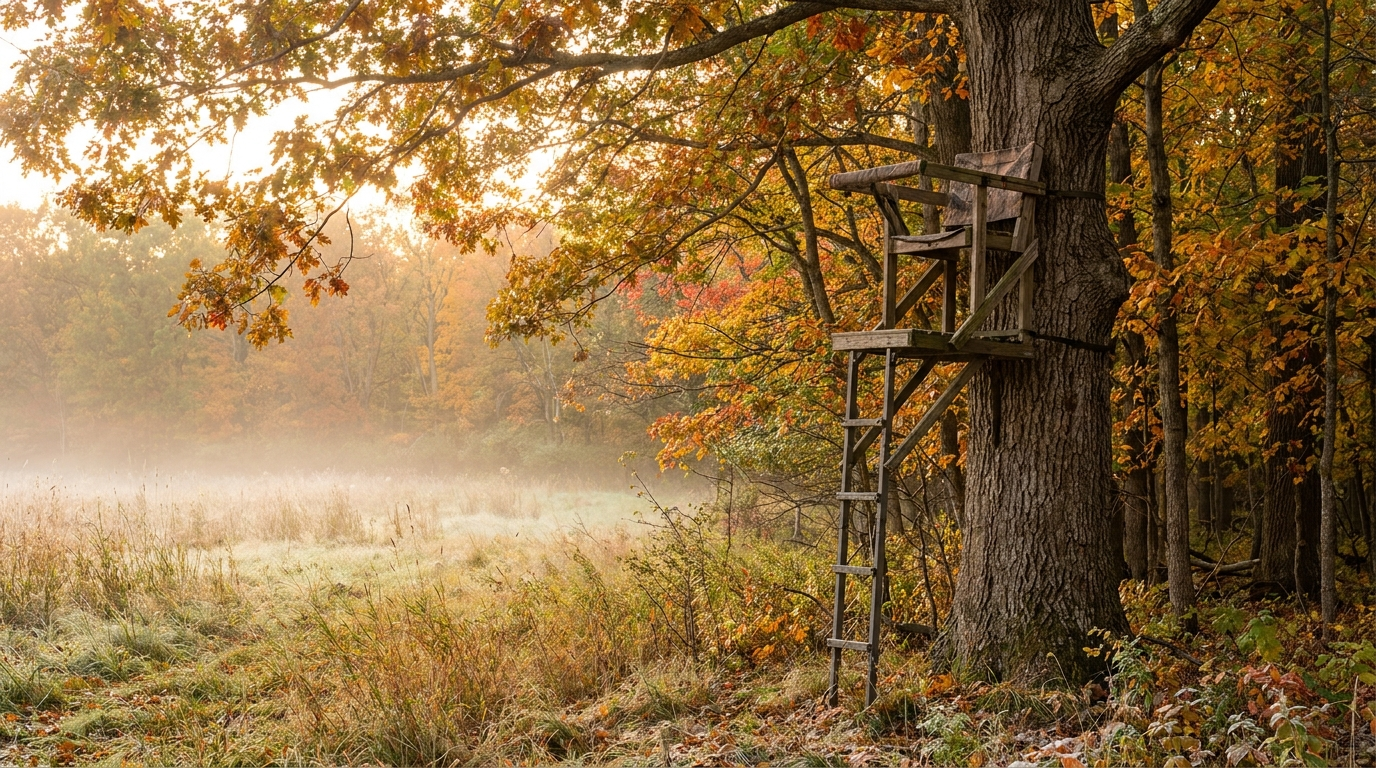
Save your best stand. That's the whole argument here, and it cuts against nearly everything else written about early-season treestand strategy this time of year. The standard advice says get in there on day one, before the pattern changes, before the corn gets cut, before anything shifts. That advice kills a lot of average bucks and very few good ones.
The Advice Everyone Gives, and Why It's Backwards
"Hunt your best intel early" makes sense on the surface. You've got trail camera history, a confirmed food source, a stand hung on the right tree for the prevailing wind. Why wait?
Because a stand isn't a fixed asset. It's a resource with a shelf life, and the first sit in a location is worth more than every sit after it combined. Tracking data on pressured, mature bucks backs this up at a level that should change how you plan a season: roughly 80 percent of mature buck harvests happen the first time a stand gets hunted. Not the third sit. Not the "we finally got the wind right" sit in November. The first one.
That number alone should reorganize your whole opener. If the first sit in a location carries most of the value, burning it on a mediocre-wind evening in the first week of the season is the single most expensive mistake in early-season treestand strategy — and it's the one almost every "get out there and hunt hard" article recommends by default.
What "Burned" Actually Means
Deer don't need to see you, wind you, or hear you to change how they use a stand site. Tracking studies on pressured, mature bucks show they start avoiding a location for several days after a single hunt, even when nothing went wrong. No blown stalk. No snapped stick underfoot. No deer standing up and blowing at you. Just a hunter present in a tree for three hours is enough to shift how a buck routes around that pinch point for most of a week afterward.
Hunt the same stand on back-to-back evenings and the effect compounds. A buck patterned near a stand hunted four evenings straight was roughly twice as likely to avoid that danger zone in the days right after, compared to a stand given time to rest. That's not a hunter's hunch. That's what the tracking data shows.
Translate that into an early-season plan and the math gets uncomfortable fast: you get one full-value sit out of your best stand. Maybe two, spaced out and lucky. Spend that sit on a 62-degree evening in the first week just because the calendar says bow season opened, and you've traded your highest-odds hunt of the whole fall for a coin flip.
The Trigger Worth Burning a Stand For
So what actually earns the vault stand? Temperature, mostly. A drop of 10 degrees or more in the daytime high — especially the first real one after a stretch of early-season heat — is the threshold that shows up again and again in deer movement data. Bucks that have been bedding tight and feeding almost entirely after dark start moving earlier and more visibly once that front passes. The 24 to 48 hours after the front clears, once the air dries out and cools, is the highest-percentage daylight window you'll get before the rut.
Worth saying plainly: the science here isn't as clean as hunting culture treats it. At least one Mississippi State University analysis of weather and deer movement found only a weak statistical relationship, small enough that the researchers questioned how much biological significance to assign it.
Cold fronts help. They're not a guarantee, and anyone who tells you otherwise is selling certainty the data doesn't actually support. What a real front does reliably is get deer up and moving with more urgency than a random Tuesday in the heat — and that urgency is the edge you're trying to buy by saving a stand for it.
A Real Two-Week Rotation
Here's how that plays out across an opener, using a hypothetical 80-acre parcel with one standout pinch-point stand and four or five secondary setups:
- Days 1-3 (opening weekend, still hot, no front in sight): hunt secondary stands only. Rotate B-team locations on decent wind days, glass field edges from the truck or a ridge instead of climbing, and let trail cameras confirm the pattern is still holding. The vault stand stays empty.
- Days 4-7 (heat persists): keep rotating secondary stands, no more than one evening per location. If a stand produces a good sighting, move off it rather than chase the same tree twice in a row.
- Day 8 (first forecast showing a 10-plus-degree drop, 36-48 hours out): stop hunting anything in the core bedding-to-food corridor. Let the whole property go quiet. This is the hardest part of the plan and the one most hunters skip.
- Days 9-10 (front arrives, temps drop): hunt the vault stand on the first cool evening, ideally on the exact wind you built the setup around. If the wind's wrong, wait one more day rather than force it — you don't get this stand back once it's spent.
- Days 11-14 (post-front, temps climb back): return to secondary stands and rebuild trail camera intel for the next front. Log what you saw on the vault sit, good or bad, because it's the best behavioral data you'll collect all season.
Adjust the calendar to your actual local pattern and check your state's opener date, but the shape holds wherever this tactic applies: rest the best location, spend the average ones, and let real weather — not the calendar — decide when you climb into the one stand that matters most.
Protect the Stand You're Saving
A rested stand only stays rested if you're not contaminating the access route on the way to your secondary sits. Walk a different trail into the B-team stands than the one leading to the vault tree, even if it costs ten extra minutes. Scent discipline matters more during the resting period than during the hunt itself — a hunter's scent trail crossing the vault stand's entry route on a random Tuesday can undo two weeks of restraint in one careless afternoon. If your climb path shares a segment with the entry and exit routes you're already trying to protect, that's the segment to reroute first.
An ozone unit earns its keep in the down weeks. Ozonics units run multiple hours per charge on a single setup, which matters if you're still hunting secondary stands near the same travel corridors while trying not to tip off the buck you're saving the good stand for.
The Kit for a One-and-Done Sit
Because you're only getting one real chance at that stand, the sit itself should be built to minimize noise and maximize time in the tree without a second trip in to fix something. A single hang-and-hunt stick or a saddle platform generally beats a permanent ladder stand here — less metal to bump on the way in, faster to clear out if the wind shifts mid-sit. Weighing the tradeoffs between a one-stick and a three-stick climb matters more for this stand than any other on the property, since speed and silence are the whole point.
A stripped-down daypack, not a full multi-day loadout, keeps the in-and-out fast and quiet. Layer for the temperature swing you're actually hunting for, not the heat you left behind in August — a 15-degree drop from the afternoon high means real cold by last light, and the wrong clothing choice for that swing is the fastest way to cut a sit short.
Save the best stand. Spend the average ones while you wait. When the front finally shows up on the forecast, you'll have a rested setup, an undisturbed access route, and the single highest-odds sit of your season still in the bank. Treestand Saver tracks live gear deals across the packs, scent control, and climbing gear built for exactly this kind of season.