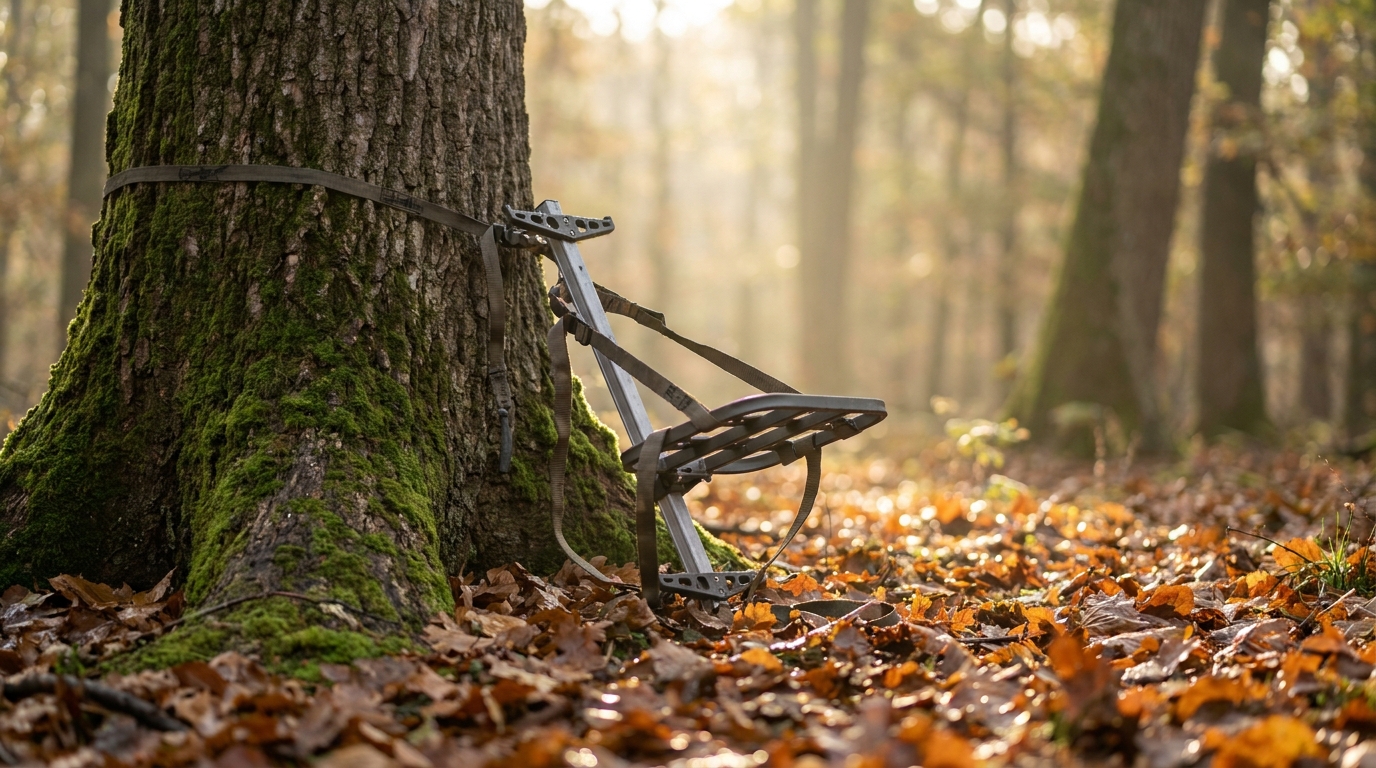
A stripped-down one-stick kit built around a single ultralight climbing stick, a lineman's rope, and a saddle platform can weigh less than half of what a full three-stick setup with a hang-on stand weighs strapped to a pack frame. That's the number most hunters lead with when they argue for going mobile. It's also not the whole story, because once you add the aider, the tether, and the extra hardware a serious one-sticker actually carries, the weight gap closes fast — sometimes it flips entirely. Neither method is universally lighter, safer, or faster. They're built for different hunters solving different problems, and picking the wrong one for your body, your terrain, and your season is how good mobile hunters turn into guys who never leave the truck.
What One-Sticking Actually Is
One-sticking means climbing and hunting off a single stick, moved one placement at a time as you ascend. You strap the stick to the tree, stand on it, clip in with a lineman's rope or tether above your head, unstrap the stick from below, move it up, re-strap, and repeat until you're at hunting height. The stick doubles as your climbing aid and, once you're set, part of your standing platform alongside a saddle or a small hang-on step.
It's slower per repetition than clipping a fixed rung on a permanent ladder, but it's also the reason one-sticking took over the mobile-hunting world over the last several seasons: a single stick strapped flat to a pack barely changes how the pack carries. Hunters covering three or four miles of public land to reach a fresh setup, or repositioning mid-morning because the wind shifted, feel that difference every single sit.
No stacked sticks banging on a frame. No extra straps working loose on mile three.
What a Three-Stick Ladder Buys You
Running three or four full-length sticks stacked one on top of the next builds something closer to a real ladder. Each stick locks to the one below it, you climb rung by rung the way you would a step-ladder in a garage, and you're standing on a stable run of steps rather than a single narrow platform by the time you reach the stand.
That stability is the entire selling point. New saddle hunters, bigger-bodied hunters, and anyone hunting with a kid or a nervous first-timer generally do better learning the sport on a stacked ladder than on a single stick, because the margin for a bad step is smaller and the climb feels closer to something familiar. A three-stick ladder is also less fussy about tree straightness — a slight bow or lean in the trunk matters less when three sticks are locked together than when a single stick has to sit flush against the bark at every new placement.
The Weight Comparison Nobody Finishes Honestly
Compare a bare one-stick to a bare hang-on step and one-sticking wins on weight every time. But nobody hunts off a bare stick. A one-stick setup that's actually safe to hunt from needs a stick, a tether or lineman's rope, a way to attach that rope to the tree above your head, and usually a small aider or step system to give your foot something to stand on besides the stick itself. Add all of that up and a fully kitted one-stick rig can land in the same range as — or heavier than — a set of two or three carbon sticks with an aider attached.
Where one-sticking still wins clearly is bulk and carry profile, not raw pounds. A single stick lies flat against a pack and doesn't shift the way three strapped-together sticks do on a long walk-in. If your hunt involves covering ground, that's the number that matters more than the number on a scale.
Noise Is the Argument Three-Stick Hunters Lose
Multiple sticks means multiple ratchet straps, multiple buckles, and multiple contact points banging against a pack frame or against each other on the walk in. Even wrapped and taped, three or four sticks clanking softly against a metal pack frame carries in still morning air, and deer that have heard that sound before will hang up on a trail well before they're in range.
A single stick, especially one built with a quiet strap or cam-lock attachment rather than a ratchet, is the quieter option almost across the board. This is one of the real, non-marketing reasons one-sticking caught on with mobile hunters working tight, pressured properties where a spooked deer at 80 yards means a blown sit rather than a minor inconvenience.
Learning Curve and the Safety Margin
This is where three-stick setups earn their keep. Climbing a stacked ladder is intuitive — most people who've climbed anything in their life can figure it out in a backyard tree with minimal instruction. One-sticking is a skill that takes real repetition to get smooth and safe: staying tethered above your head at every single transition, managing rope slack, and trusting your full weight on one narrow stick and an aider takes practice most hunters underestimate.
Every serious source on one-sticking says the same thing: practice it low and slow, on a tree in the yard, weeks before you try it twenty feet up in the dark. Skipping that step and trying to one-stick for the first time on opening morning is a genuinely bad idea.
A three-stick or four-stick setup is far more forgiving of a rushed first attempt, which is exactly why it's still the better recommendation for a first-year saddle hunter or anyone hunting alone without a mentor to check their system.
Terrain and Tree Type Change the Answer
Smooth-barked trees — beech, some maples — make one-sticking harder because there's less texture for a strap or cam to bite into, and a stick can shift under weight in a way it won't on rough-barked oak or hickory. Leaning or forked trunks also punish a single stick more than a stacked ladder, since a stacked set of sticks locked together resists twisting in a way one stick working alone can't.
Public land hunters moving between multiple trees in a single season should weigh how much of their timber is straight, rough-barked hardwood versus mixed or smooth-barked stands before committing hard to a one-stick-only kit. A lot of experienced mobile hunters carry two full-length sticks plus a short aider as a middle option — enough redundancy to handle an awkward tree, light enough to still move fast.
Cost Isn't as One-Sided as It Looks
Budget three-packs of aluminum climbing sticks are genuinely cheap for what they do and remain a smart entry point for a hunter who isn't sure yet whether mobile hunting fits their style. Premium ultralight one-sticks and carbon multi-stick setups cost more per stick, but a one-stick kit needs fewer total pieces — you're buying one excellent stick instead of three decent ones, plus a tether and aider.
Neither route is the objectively cheap one once you count the whole kit: rope, tether, aider, and a saddle or platform all add to the total regardless of which climbing method you build around. Treat the climbing sticks as one line item in a full mobile setup, not the whole budget.
How to Actually Decide
Run your own hunt through a short checklist rather than picking whatever's trending in your hunting group chat:
- Distance covered per sit — long public-land walk-ins favor one-stick for the flat carry profile
- Number of trees hunted per season — hunters who set and forget one or two stands lean toward a stable three-stick ladder; hunters relocating constantly lean one-stick
- Experience level — first saddle season points toward three sticks; a hunter who's already comfortable on a lineman's rope can move to one-stick sooner
- Timber type — rough-barked hardwood favors one-stick; mixed or smooth-barked stands favor a stacked ladder
- Noise sensitivity of the property — heavily pressured public ground rewards the quieter single-stick carry
Most experienced mobile hunters land somewhere in the middle after a season or two — two full sticks and a short aider, or a three-stick ladder they've learned to pack quieter with foam or tape on every contact point. There's no wrong answer here, only a setup that matches how far you actually walk, how many trees you actually hunt, and how much practice you're honestly willing to put in before the season opens.
Build the kit around your actual hunt, not around what looked good in a product video. Current climbing sticks and saddle accessories run deep discounts worth checking before the season fills the calendar, and a pack built to carry sticks flat matters more than most hunters budget for. If you're still dialing in the rest of the kit, a saddle-hunting starter guide covers what else belongs on the list, and running through a pre-season safety check is worth doing regardless of which climbing method you land on. Check current deals at Treestand Saver while you sort out the rest of the setup.