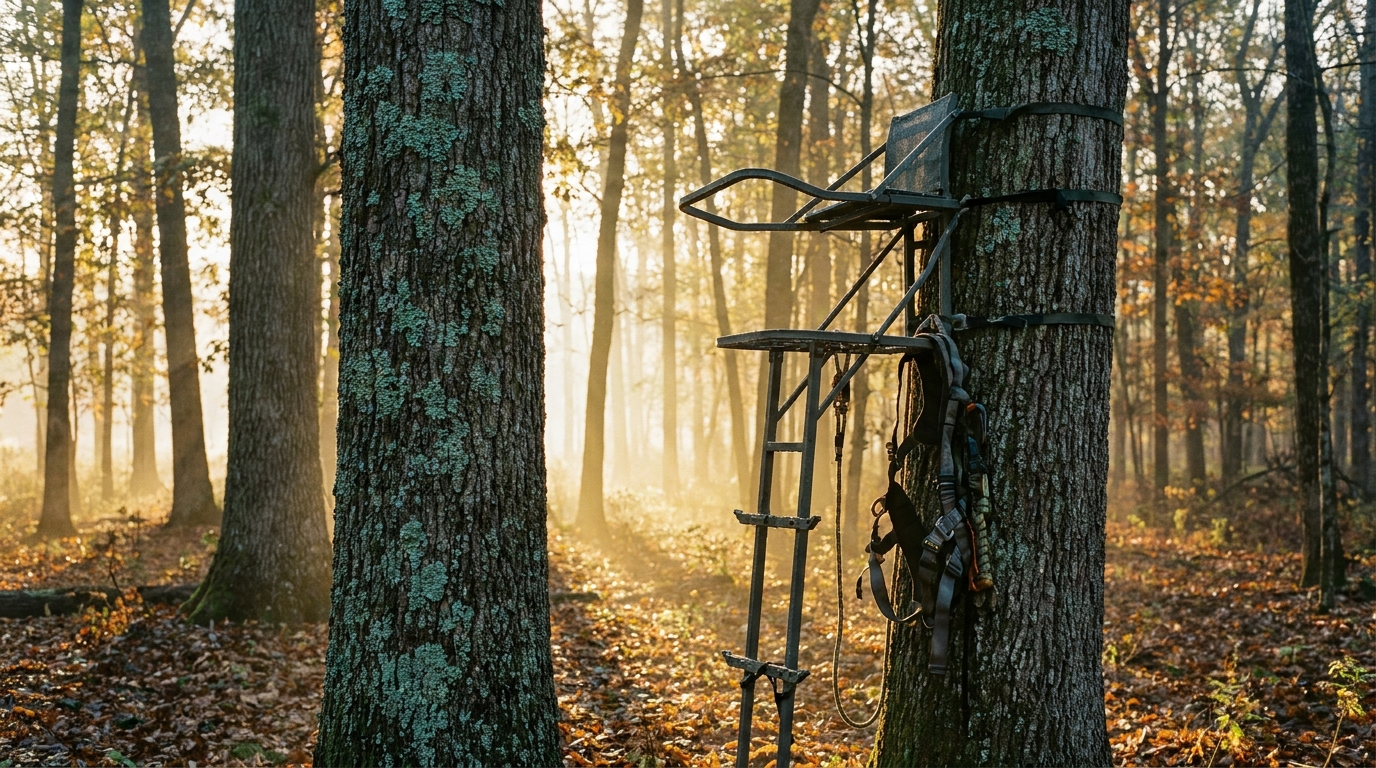
Eighty-six percent of treestand falls happen while a hunter is climbing in or out of the stand, according to data tracked by the Tree Stand Safety Awareness Foundation. Ninety-nine percent of hunters hurt in a fall weren't connected to the tree when it happened. Most of those weren't wearing a harness at all — the gear was in the truck, or still hanging in the garage, saved for "once I'm up."
That's the gap hang-and-hunt tactics widen if you're not careful. A guy who hunts three fixed stands all season climbs into position a handful of times. A guy running a mobile setup — climbing sticks and a hang-on, or a saddle, moved every few sits to stay on fresh sign — might rig and de-rig fifteen or twenty times before Halloween. More reps means more exposure to the exact moment where most accidents happen. It also means more chances for a strap, a stick, or a carabiner to fail from wear nobody checked.
Late July is the window to fix that, while gear is stacked in a corner of the garage instead of already hung in a tree.
The Stand Itself, Before It Goes Back Up
Pull every stand and set of sticks out and look at them under real light, not a headlamp in the dark of a pre-dawn hang.
- Welds and frame joints, checked for hairline cracks, rust bubbling under paint, or a weld that looks different from the others on the same stand. Any of those, and the stand gets retired, not repaired.
- Straps and cables, checked for fraying, sun-bleached stiffness, or cuts from being cinched against bark for a season. A ratchet strap with a torn tooth or a cable with broken strands doesn't get a pass because it's just the one spot you use it.
- Platform and seat mounting hardware. Bolts back out over a season of vibration and temperature swings, so check torque on everything, not just the parts that looked loose at a glance.
- Climbing stick strap buckles. Plastic cam buckles crack in cold storage — squeeze each one closed under load before it goes back in the truck.
The Treestand Manufacturers Association doesn't publish a hard expiration date for a stand — replacement is based on inspection findings, not a birthday. But a stand that's been through five Octobers of rain, freeze-thaw, and UV deserves a slower, more skeptical look than one bought last spring.
The Harness, Tether, and Lineman's Belt
This is the equipment that actually decides whether a mistake turns into a story or an ambulance ride, and it's also the gear hunters replace least often. A harness doesn't look worn the way a stand does — the failure point is usually stitching, webbing, or a buckle that's degraded from the inside.
Inspect before the first hang of the year, not after:
- Webbing, checked for fraying, cuts, mildew staining, or a stiff, brittle feel compared to when it was new
- Stitching at every load-bearing seam, looking for loose threads or a seam that's started to pull apart
- Buckles and D-rings, checked for cracks, deformation, or rust on any metal hardware
- The tether and lineman's belt specifically, since these take the most abuse — they're rigged and unrigged at every single sit, not just once a season
A lifeline changes the math here. Run one from the base of the tree to your standing height, clip your tether to it with a prusik knot, and you're connected from the moment your boot leaves the ground until you're back down — not just once you reach the platform. Keep the prusik snugged high, with as little slack in the tether as the knot allows; slack is exactly what turns a stumble into a fall with momentum behind it.
If any piece shows real wear, replace it. A safety harness is one of the few pieces of hunting gear where the cheap move — skipping the upgrade — is also the dangerous one. Current markdowns on harnesses, lifelines, and replacement straps are worth a look before the sticks go back in the truck; check treestand accessories on sale rather than running last year's frayed set through one more October.
What Hang-and-Hunt Actually Changes
Mobile setups exist because they solve a real problem: deer patterns shift as food sources change, and a hunter locked into three fixed stands is stuck hunting where he set up in August, not where the deer are in October. A climbing stick-and-hang-on combo, or a saddle rig, lets you follow the sign instead of hoping it comes to you.
The tradeoff is exposure. Every relocation means a full rig-and-derig cycle — climb, hang, hunt, come down, move, repeat. If your sequence isn't automatic, you're improvising at height, and improvising is where corners get cut.
Practice the sequence on the ground before the season, not during it. Set sticks against a tree in the yard at six or eight feet and run the full routine — lineman's belt attached before the first step up, lifeline clipped at height, tether secured before you unclip anything else — until it's boring. A hunter who can hang a stand and get settled in under ten minutes, without thinking through each step, is the hunter who won't skip a step when it's 5:45 a.m. and the woods are getting light.
Pack weight matters more with a mobile setup too, since you're carrying the whole rig every sit instead of leaving it hung. A dedicated hang-and-hunt pack that carries sticks externally without them clanging against the frame is worth the money — browse packs built for mobile stand hunting if last year's book bag is still doing that job.
The Climbing Sequence, Every Time
The order matters more than the gear:
- Attach the lineman's belt to the tree at ground level before the first step onto a stick
- Move the lineman's belt up as you climb, staying connected at every stage
- At hunting height, wrap and clip the lifeline or tether to the tree
- Only then unclip the lineman's belt
- Reverse the exact sequence to descend — lineman's belt back on before the tether comes off
Skipping step order — unclipping early because the platform's right there, or climbing "just this once" without the lineman's belt because the stand's already hung — is how the 86 percent statistic keeps its number. It's not a knowledge gap. Most hunters who fall know the correct sequence. They just didn't follow it on the one day it mattered.
What to Retire, Not Repair
Some failures aren't worth patching:
- Any strap, rope, or webbing with visible fraying or cuts
- A harness with stitching pulled loose at a load-bearing seam
- A stand with cracked welds, bent frame members, or rust through the paint
- Cam buckles that don't close fully under load
- Any hardware you genuinely can't remember the age of
None of that is a judgment call worth making at height. Replace it on the ground, in daylight, before opening day — not from a tree at first light when the alternative is climbing down and losing the morning.
Get Ahead of October
The gear check takes twenty minutes per stand. Skipping it costs nothing until the day it costs everything. Early-season hang-and-hunt weather also runs warm, so this is a good time to check that lightweight early-season layers still fit the plan — early-season clothing tends to move fast once temperatures start dropping, so don't wait until the first cold snap to look.
For more on the mobile setup itself — the saddle side of this, including lineman's belts and platforms from scratch — the saddle hunting starter guide covers the full kit. And if bait sites factor into your stand placement this fall, the treestand site setup guide for bear baiting covers a lot of the same access and concealment thinking that applies to whitetail sets.
Twenty minutes with every strap and buckle in hand beats finding out mid-October that something's worn through. Check current deals across the site while the gear's already out on the garage floor — better to replace something in July than discover it failed in a tree.