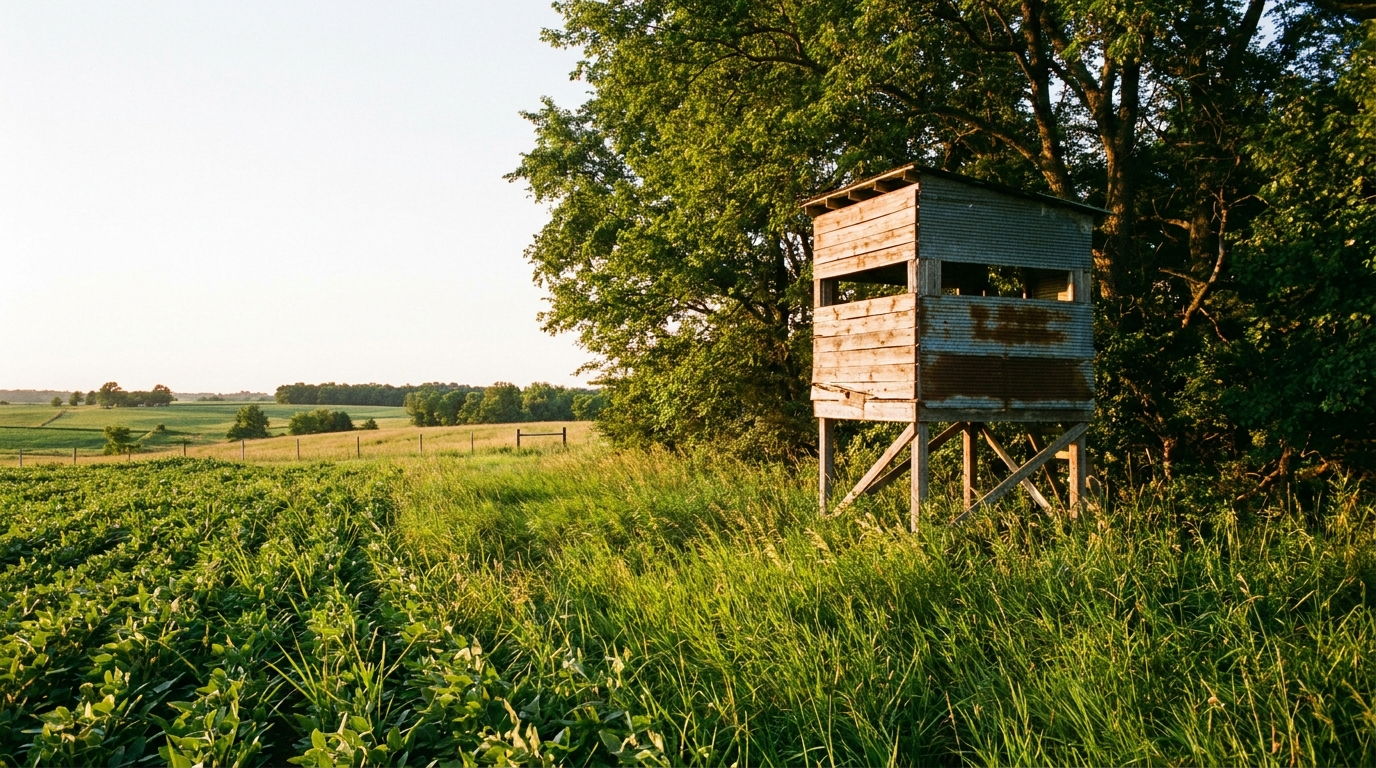
By the third week of July, whitetails have already settled into a summer pattern tight enough to set a watch to — same bean field at last light, same bedding thicket by 7 a.m., same trail worn through the fence gap. That pattern is exactly what a new box blind threatens to interrupt, and it's why the timing of when you put one up matters as much as where you put it. Get both wrong and you'll spend October hunting a blind deer have already decided to avoid.
A box blind is a permanent structure, or close to it. Deer see it every day for months before you ever climb the ladder to hunt it. That gives you an advantage no run-and-gun setup offers — but only if you use the lead time correctly.
Set it up now, hunt it in the fall
The two-week acclimation window most hunters have heard of is the bare minimum, not the target. Deer in agricultural country adjust to a new structure faster than deer on heavily pressured public ground, but either way, a blind erected in late September and hunted in October is still a foreign object to a mature buck. A blind that's stood in the same fence corner since July is just part of the field now. Deer stopped noticing it back in August.
There's a practical reason beyond acclimation, too: summer is when you have daylight, dry ground, and a truck that can get equipment to the site without leaving ruts through a food plot. Waiting until Labor Day means fighting shorter days, wetter weather in a lot of regions, and a compressed window before bow season opens. If the blind isn't up yet, this week is a better time to finish the job than any week between now and opening day.
Site selection: food, cover, and an approach you won't ruin
Box blinds get hung near food more often than any other feature, and for good reason — food sources are the one thing that reliably pulls deer past a fixed point at a predictable time of day. A field edge, a food plot corner, or a mast-dropping oak flat all work. What doesn't work is the middle of the opening. Set the blind back into the tree line, five to ten yards off the actual edge, so the structure has something behind it besides sky.
Cover matters on the approach side as much as at the site itself. A blind a deer has to expose itself to reach feels different than one tucked where deer already feel safe moving. Thick brush, a fence line, a drainage — anything that lets deer close the last hundred yards without crossing open ground keeps them using the spot instead of hanging up short of it.
Water factors in more than most hunters give it credit for. A site within a few hundred yards of a creek, pond, or seep gets checked more often through the hot stretch of early fall, since deer are still drinking heavily before the weather turns. It's a small edge, but small edges are what separate a blind that produces from one that just sits there.
Your own access route deserves the same scrutiny you'd give a treestand. If reaching the blind means walking through the field deer are using to approach it, you're leaving scent in the one place you can't afford to. Route your path along a fence line or through timber that keeps you off the primary trail, even if it adds five minutes to the walk in.
Wind decides placement — the view is secondary
A blind with a great view and the wrong wind is a blind you'll hunt twice and then abandon. Position it so your scent gets carried away from the direction deer are most likely to approach from during your primary hunting window, not the direction that happens to look best from the ladder.
This is where a lot of otherwise solid setups fall apart: the builder picks the spot with the best sightlines, then discovers in October that the prevailing wind blows straight from the blind toward the field every evening. At that point moving a box blind is a bigger job than it sounds — new footings, a new approach trail to cut, another few weeks of re-acclimation.
Nobody wants to redo concrete work in October. Check historical wind data for your specific property before you dig the first post hole, and plan for the wind pattern that shows up most often during the weeks you'll actually be sitting there, not just today's forecast.
Sizing it to how you actually hunt
Box blind dimensions matter more than most first-time buyers assume. A 5x5 works fine for one hunter with a rifle. A 5x6 handles one comfortably or two in a pinch. Once you're regularly bringing a second person — a kid, a spouse, a hunting partner — a 6x6 or 5x7 stops feeling cramped after the second hour.
Interior height matters just as much, especially for bowhunters. Most factory box blinds run around six feet inside, built with a rifle hunter's shooting window height in mind. If you're over six feet tall and drawing a bow inside the blind, that ceiling gets uncomfortable fast — check specs for models built with a taller ceiling and a window height that accommodates a full draw, not just a rifle rest.
Height off the ground is its own decision. Five to fifteen feet covers most situations, with five- and ten-foot base kits the most common factory options. Lower puts you closer to the ground-level sightlines deer are used to scanning, which can work in thick cover where a taller structure would stick out above the tree line. Higher gives you a better wind advantage and a wider view over open ground, at the cost of a longer, noisier climb every time you go in and out.
Concealment that holds up past opening day
A blind that blends in during setup can still stick out in October once the tree line around it changes color or drops leaves. Match the exterior to what the surrounding cover will actually look like during hunting season, not what it looks like in July. Brush it in with cut limbs, and check that finish periodically — a faded or peeling exterior catches light differently than fresh material, and deer notice contrast more than shape.
Windows are the other half of concealment. Tinted or one-way glass cuts down on movement and glint from inside, which matters more the longer you sit. A blind with clear, uncovered openings gives away a raised binocular or a shifted rifle barrel from a hundred yards out, undoing a lot of the acclimation work you put in over the summer.
Before you walk away from the build
A few things are worth checking before you call the site finished. Ladder and step condition matters most — a wobbly step in July becomes a genuine safety problem on a frosty morning in November, and it's far easier to fix now with tools already on site. If the blind sits on stilts or a raised platform, a proper harness and lifeline setup belongs on the checklist the same way it would for a treestand. An elevated box blind is still a fall risk, even though it feels more like a room than a stand.
Walk the shooting lanes from the seated position you'll actually hunt from, not standing at the door. Trim anything that blocks a clean shot at the ranges you expect, and do it now while foliage is easy to judge and cutting it won't spook anything that matters. Check that windows open and close quietly — a squeaky hinge discovered in September means one more disturbance right when you can least afford it.
Get the structure, the site, and the timing right this month, and the blind you build in July fades into the background well before you need it to produce in October. Browse the current lineup of box blinds and ground blinds to compare sizes and window setups, and round out the build with glass from the optics deals for scouting the site before you commit to a spot, plus a harness and other setup gear from hunting accessories. For the placement decisions that carry into the season itself, see how blind location fits into the bigger picture in our breakdown of stand placement through the rut, and pair the new site with a trail camera strategy that confirms deer are using it the way you planned. Then head back to the current deals and start building the rest of the kit.