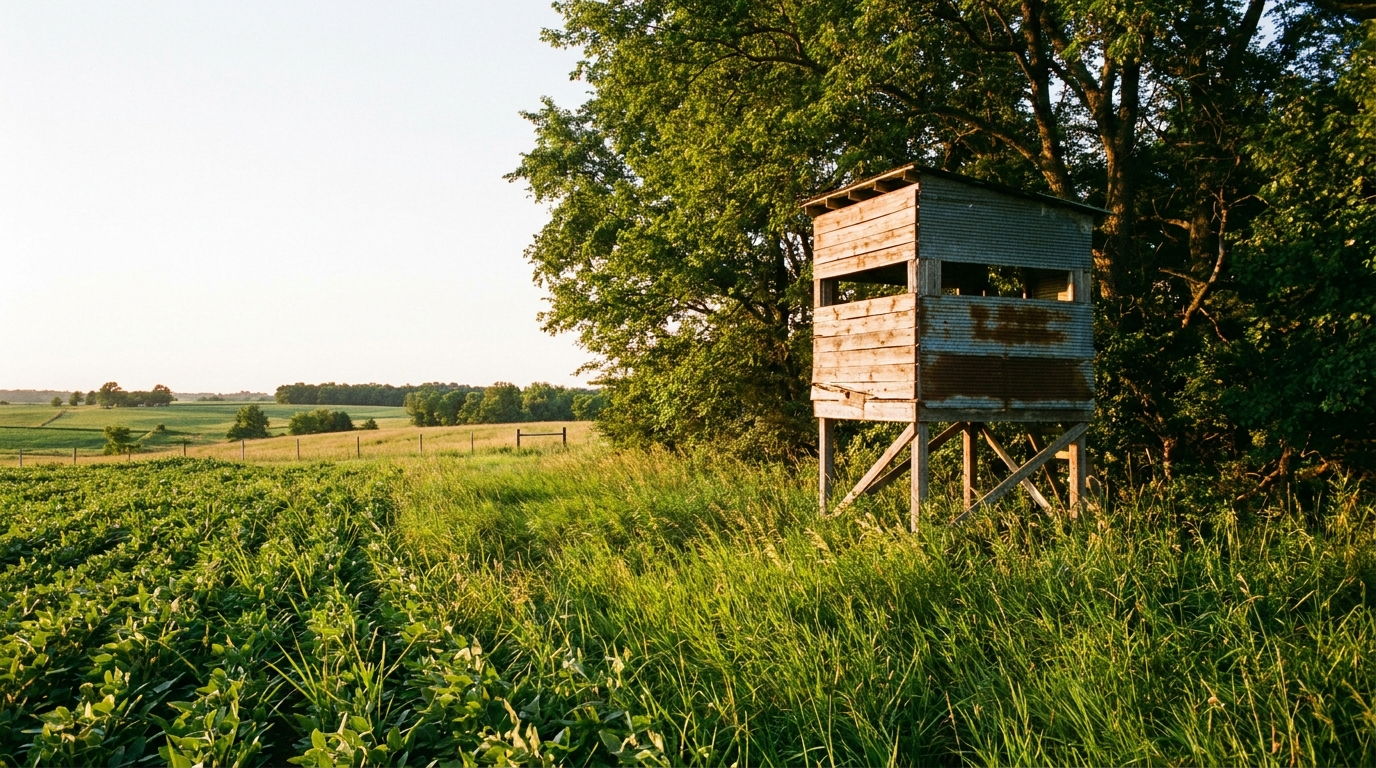
The thermometer on the dash reads 94 degrees at 7:40 p.m., and the inside of a sealed box blind is worse than that. Sweat soaks through a shirt before the sun even clears the tree line on its way down. Then the feeder clicks, corn rattles into the trough, and forty yards out a sow eases from the brush with three shoats trailing behind her. This is the whole case for hunting hogs from a box blind in summer: they're running almost entirely nocturnal in this heat, and a feeder on a timer is the most reliable way to be sitting in the right spot when they finally show themselves.
Box blinds earn their bad reputation in the hottest part of the season. A sealed plywood or steel box with tinted glass holds heat the way a car does with the windows up, and sitting in one from mid-afternoon through dark without doing anything about it means dripping sweat, radiating scent, and shifting around more than you'd ever move in a treestand. Any one of those three things can put a wised-up sow on alert before she steps into range. None of that means the box blind is the wrong tool for July. It means most people run it exactly the way they'd run it in November, and November tactics don't survive August heat.
Vent it like you mean it
The fix starts before you ever climb in. Crack the windows on the shaded side of the blind rather than the side facing the feeder, and prop or remove any interior vent covers that trap dead air near the ceiling. A small fan wired to the same 12-volt battery running your feeder timer moves more air than most people expect from something that fits in a backpack, and it's quiet enough not to matter at hog-hunting ranges. Blind color matters more than most hunters account for — a dark-painted interior absorbs and holds heat long after the sun drops, where a lighter interior sheds it faster once the air starts to cool.
Timing the sit matters as much as the hardware. Climbing into a box blind at 2 p.m. to "get settled early" in July is how a hunt turns into an endurance test. Show up ninety minutes before the first hogs are likely to move, not three hours before, and the blind has less time to work against you before it starts working for you.
Set the feeder for the pattern hogs are actually on
Once the heat sets in, hogs shift their whole schedule, and a feeder timer set for a 4 p.m. dump is throwing corn out for an animal that isn't moving until well after dark. Run the first feed thirty to forty-five minutes before legal shooting light ends, so hogs are already committed to the site when you're still able to see well enough to shoot. Where night hunting is legal, a second dump around midnight catches the animals that learned to avoid the first window.
Corn that's been allowed to sour draws harder in summer than dry corn does — the smell carries farther in humid air, and hogs already keying in on rot and fermentation from natural food sources respond to it faster than to fresh grain. Feeder placement near a wallow or water source outproduces a feeder sitting alone in a dry field for a simple biological reason: wild hogs don't have functional sweat glands, so wallowing in mud is how they regulate body temperature and deal with insects once it's hot. A blind positioned so the feeder and a mudhole are both in range gives you two draws for the price of one setup.
Wind placement deserves more attention than most hunters give it in summer. Evening thermals swirl unpredictably as the ground cools faster than the air above it, so a wind check on a phone app before you climb in isn't the same as knowing what the air is actually doing at blind height an hour after dark. Check a lighter or a puff bottle from the blind itself once you're settled, not just from the truck.
Light the shot without educating the herd
Red light spooks hogs less than white light does, which is why most feeder-mounted lights on the market are red by default. What doesn't get said often enough: hogs habituate to a red light faster than deer do, especially on a feeder they're visiting more than once a week, so a light that stays on solid every single sit will eventually train them to hang back at the tree line until it's fully dark. Rotating between a dim setting and full brightness, or triggering the light only once an animal commits past a set distance, keeps the advantage longer.
Thermal and digital night vision have come down in price enough that they're a realistic option for a serious feeder setup rather than a luxury reserved for professional trappers. Whether you can legally use one after dark depends entirely on your state — check your state's regulations before buying anything, because they vary by state and change from year to year. Several southern states, including Texas, Georgia, Louisiana, Arkansas, Florida, and North Carolina, have historically allowed hog hunting after dark with an artificial light or night-vision device on private land, but permit requirements, county-level restrictions, and legal shooting hours differ enough that what's true for a neighboring property isn't automatically true for yours.
Know when to leave the box and sit open
Here's the part that goes against what most box blind sellers want to tell you: on the hottest, stillest nights — upper 90s, dead calm, the kind of evening where the air just sits — a vented box blind can still be miserable, and swirling ground-level thermals can carry your scent in every direction no matter how you've oriented the door. An open ladder stand or a low ground blind set back from the feeder, with the wind reliably at your back instead of swirling around a sealed structure, will sometimes outhunt the box on those specific nights. Recognizing which kind of evening you're actually sitting in, rather than defaulting to whatever structure is already built, is the difference between a productive July hunt and three hours of sweating for nothing.
Ammo and the follow-up shot
A box blind's real advantage isn't concealment — it's the rest. A stable shooting window at fifty to a hundred yards means you can take a controlled, high-percentage shot instead of a rushed offhand one, and that matters more for hogs than it does for whitetails. A hog that doesn't take a shot through the vitals or high shoulder rarely drops in its tracks, and once the first shot cracks, the rest of the sounder is gone in under two seconds. Use the rest you've got. Aim small, take the shot you're sure of, and don't count on a follow-up once the sounder scatters.
None of this is complicated once you separate it from how you'd run the same blind in November. Heat changes when hogs move, how a sealed box behaves, and how a feeder timer should be set — build the sit around that instead of around habit, and the same box blind that felt like a punishment in July starts producing again. A vented blind, a properly timed feeder, and enough patience to read a specific night instead of forcing the plan you had for a different season is most of the battle.
If you're putting a summer setup together, a set of ventilation kits made for box blinds solves the heat problem faster than cutting your own vents, and feeder-mounted lights built for hog activity are worth comparing before you settle on whichever one is cheapest at the farm store. Pair either with low-light and night optics built for dusk-into-dark hunting, since a blind setup is only as good as what you can actually see through the window. For the site work itself, dialing in blind placement and thinking through site setup for a bait stand both cover ground that applies directly to a summer hog site, even though neither piece was written with hogs in mind. Whatever you're missing from the kit, check today's gear deals before the season gets any hotter.